
Table of Contents
- Why Synthetic Fragrances Are Hiding in Your Moisturizer
- How to Identify Hidden Phthalates in Skincare Labels
- Essential Oils vs Synthetic Fragrance Safety: What the Research Shows
- The Benefits of Grass-Fed Tallow for Skin as a Fragrance-Free Base
- Natural Fragrance Options That Actually Last: Botanical Extracts and Absolutes
- How to Switch to Natural Alternatives Without Triggering a Reaction
- Conclusion: Build a Skincare Routine That Smells Like Plants, Not a Lab
- Frequently Asked Questions
Last Updated: September 8, 2026
Why Synthetic Fragrances Are Hiding in Your Moisturizer
The search for natural alternatives to synthetic fragrances in skincare usually starts with a rash, a headache, or a nagging feeling that your moisturizer shouldn't smell like a chemical spill. Synthetic fragrance often hides in plain sight under vague terms like "parfum" or "fragrance." At IT'S THE BALM CO., we build our formulas around single, recognizable ingredients, and we believe you deserve to know exactly what touches your skin.
A product labeled "unscented" can still contain masking fragrances, and a product labeled "natural" can still rely on synthetic musks and phthalates. The distinction matters because your skin absorbs what you apply, and fragrance compounds are among the most common triggers for contact dermatitis. Below, we'll show you how to spot these hidden ingredients, what safer options work, and how to switch without irritating sensitive skin.
Swapping out synthetic fragrance isn't about chasing a trend; it's about reducing exposure to volatile organic compounds and potential endocrine disruptors that serve no functional purpose in skincare. This guide walks through the chemistry, the labels, and the effective plant-based alternatives.
How to Identify Hidden Phthalates in Skincare Labels
Phthalates are a group of synthetic chemicals used to make fragrances last longer and help products absorb into the skin, and they rarely appear on ingredient labels by name. Instead, they hide behind the single word "fragrance" or "parfum," which is legally allowed to represent a proprietary blend of dozens of undisclosed compounds. If you want to identify hidden phthalates in skincare, you have to look for what the label doesn't say.
The most common phthalates used in personal care products are diethyl phthalate (DEP), dibutyl phthalate (DBP), and dimethyl phthalate (DMP) (the FDA). DEP is the one you are most likely to encounter in skincare because it acts as a solvent and fixative for fragrance oils. DBP, while more commonly associated with nail polish, has been found in some moisturizers as a plasticizer. The challenge is that under the Fair Packaging and Labeling Act, the FDA does not require individual fragrance ingredients to be listed on cosmetic labels. A single term like "parfum" can legally mask a cocktail of dozens of compounds, including phthalates, without any disclosure.
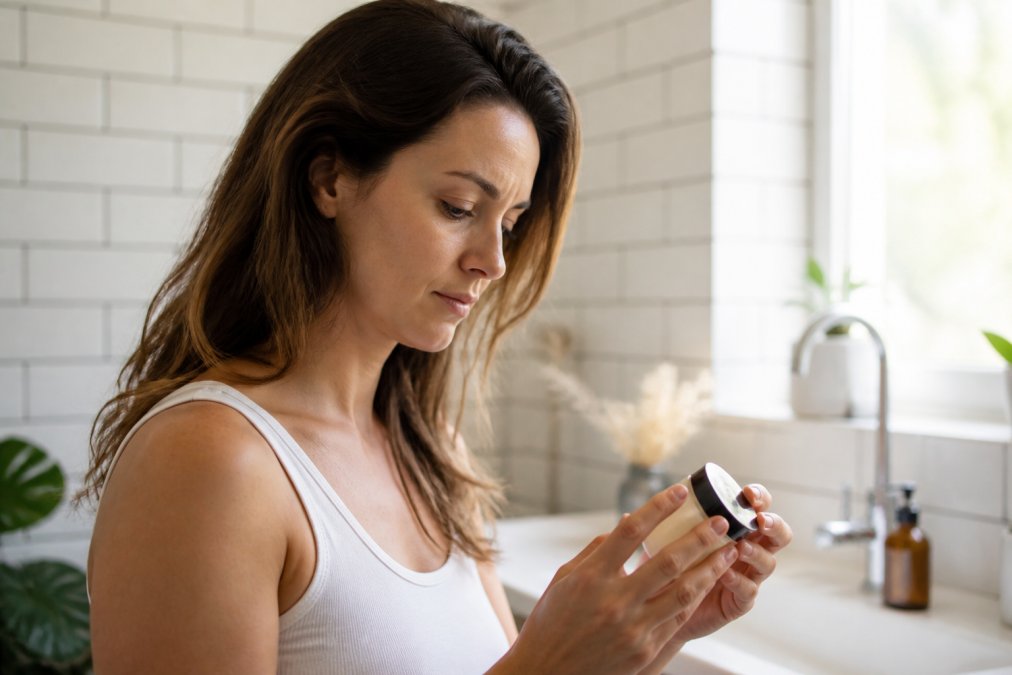
One regulatory bright spot: California's Proposition 65 requires warnings about chemicals that cause cancer, birth defects, or reproductive harm. DBP and DEHP are on that list, but DEP is not, so its absence from warning labels does not mean it is absent from the product. This patchwork of regulation means the burden of identification falls on you.
A practical identification strategy involves three layers. First, scan the ingredient list for any term ending in "-phthalate", DEP, DBP, BBP, DEHP, and treat their presence as a red flag. Second, look for the word "fragrance" or "parfum" anywhere in the list; if it appears without qualification, assume phthalates may be present. Third, be wary of terms like "fragrance oil" or "perfume oil," which almost always indicate synthetic construction rather than botanical extraction.
Phthalates serve no functional purpose beyond scent stabilization, they do not moisturize, protect, or repair. They exist to make synthetic fragrance last longer, meaning you absorb a chemical linked in animal studies to endocrine disruption and reproductive toxicity, according to the National Toxicology Program (ntp.niehs.nih.gov).
For those with fragrance sensitivity or eczema, this lack of transparency makes patch testing nearly impossible. The only reliable workaround is to choose products that list every ingredient by name. If a brand cannot tell you what is in its fragrance blend, look elsewhere, which is why at IT'S THE BALM CO., we list every botanical and essential oil in our formulas.
Essential Oils vs Synthetic Fragrance Safety: What the Research Shows
The safety gap between essential oils and synthetic fragrance is not about one being universally "safe" and the other "toxic." It is about predictability and disclosure. Essential oils are consistent and traceable; synthetic fragrances can contain hundreds of undisclosed chemicals with limited safety data. To understand the difference, look at the specific molecules involved.
Synthetic fragrances often rely on synthetic musks, galaxolide (HHCB) and tonalide (AHTN), because they are cheap, stable, and mimic natural musk. They are lipophilic and bioaccumulative, building up in fatty tissues over time. The Environmental Working Group has flagged certain synthetic musks as potential endocrine disruptors based on animal studies.
Essential oils are composed of terpenes, esters, aldehydes, and ketones. Lavender oil contains linalool and linalyl acetate; rose damascena contains citronellol, geraniol, and nerol. These volatile compounds evaporate at different rates, making natural scents feel dynamic. The critical nuance: linalool and limonene can oxidize when exposed to air, and oxidized linalool is a known sensitizer, so an old bottle is more likely to cause a reaction than a fresh one. This is an argument for buying fresh, properly stored products.
The American Contact Dermatitis Society named limonene and linalool as allergens of concern in 2017, but sensitization rates are tied to oxidized forms, not fresh botanicals (the American Academy of Dermatology). A well-formulated product with antioxidants and proper packaging minimizes oxidation. Synthetic fragrance allergens, by contrast, are often undisclosed, so you cannot assess your exposure.
A natural isolate is a single compound extracted from a plant, for example, linalool from coriander. Isolates offer consistency but lose the synergistic complexity of whole oils, which contain hundreds of interacting compounds. Some research suggests this complexity can modulate sensitization potential, which is why whole botanicals are often preferred for sensitive users.
| Fragrance Type | Key Compounds | Primary Risk | Disclosure Level |
|---|---|---|---|
| Synthetic fragrance | Synthetic musks (galaxolide, tonalide), phthalates (DEP, DBP) | Hidden allergens, bioaccumulation, endocrine disruption | "Parfum" or "Fragrance", undisclosed |
| Whole essential oils | Terpenes (linalool, limonene), esters (linalyl acetate) | Oxidation-related sensitization in aged products | Named botanical, fully disclosed |
| Natural isolates | Single compounds (e.g., isolated linalool) | Rare sensitization, loss of synergistic complexity | Named compound, fully disclosed |
| Unscented | No aromatic compounds | Masking agents possible | Varies, check for "masking fragrance" |
The takeaway is not that synthetic fragrance is universally toxic or essential oils universally safe. Essential oils give you a known, finite list of compounds you can research and patch test; synthetic fragrance gives you an undisclosed mixture that may contain allergens, endocrine disruptors, and bioaccumulative musks. For sensitive skin, the known list is the only rational choice.
The Benefits of Grass-Fed Tallow for Skin as a Fragrance-Free Base
Grass-fed tallow for skin offers something that most moisturizing bases cannot: a composition nearly identical to the sebum your skin naturally produces. This bioidentical match means your skin recognizes tallow as a familiar substance rather than a foreign irritant, which is why it works so well for conditions like eczema, psoriasis, and rosacea. Rich in vitamins A, D, E, K, and B12, tallow provides deep moisturization while supporting the skin's barrier function.
What makes tallow particularly valuable in the context of fragrance-free skincare is its neutral character. Unlike plant oils that carry their own distinct aromas, high-quality tallow has a very mild scent that disappears after application. This allows formulators to add botanical fragrances for those who want them, or leave the balm completely unscented for those who cannot tolerate any aromatic compounds.
The anti-inflammatory and anti-fungal properties of grass-fed tallow also address the root causes of many skin conditions rather than just masking symptoms. When your skin barrier is compromised, it becomes more reactive to everything, including fragrance. By healing the barrier first, many people find they can tolerate botanical scents they previously could not. A small-batch, handcrafted approach ensures the tallow retains these nutrients without the harsh processing that strips commercial moisturizers of their beneficial compounds.
Natural Fragrance Options That Actually Last: Botanical Extracts and Absolutes
The biggest complaint about natural fragrance is that it fades quickly, and that criticism is fair. Synthetic fixatives hold scent for hours, while natural aromatic compounds evaporate at different rates. But this is a feature of how botanical extracts interact with your skin, the key is understanding which options offer staying power.
Absolutes and resinous extracts are the workhorses of natural perfumery. Jasmine grandiflorum, rose damascena, and blue tansy are not just pleasant scents; they are complex absolutes that linger because their heavier molecular weight slows evaporation. Carrier oils like calendula-infused jojoba also play a role, anchoring lighter aromatic compounds and releasing them gradually throughout the day.
Olfactory fatigue also plays a role: your nose stops registering a scent after continuous exposure, so what you perceive as "fading" is often your brain tuning out a constant stimulus. People around you may still smell the fragrance hours later. Natural fragrances create a gentle olfactory profile rather than a chemical blast.
For those who want scent with longevity, look for products that combine a tallow or carrier oil base with higher concentrations of botanical absolutes. A product like the Sweet Jasmine Tallow Balm at $57.00 pairs jasmine grandiflorum with tallow, giving you an anti-aging treatment that delivers both skin benefits and a lingering, natural aroma. The Rose Tallow Balm at $51.00 serves a similar role, using rose damascena to diminish fine lines while imparting a classic floral scent that wears close to the skin.


How to Switch to Natural Alternatives Without Triggering a Reaction
Switching to natural alternatives to synthetic fragrances requires a strategy, not a shopping spree. If you have used synthetic products for years, your skin may be highly reactive, and introducing new botanicals too quickly can trigger a flare. Transition gradually, allowing your skin barrier to heal first.
Start with a completely unscented base to calm your skin. Use a pure tallow balm for one to two weeks, giving your barrier time to repair and your skin to reset. During this period, your skin is not being challenged by fragrance compounds, which allows any existing irritation to subside.
Once your skin feels calm, introduce a single botanical product and perform a patch test. Apply a small amount to your inner forearm and wait 24 to 48 hours to check for any reaction. If your skin tolerates it, begin using it on your face and neck. If you experience redness or itching, step back to the unscented base for another week before trying a different botanical.
The most common mistake is switching everything at once, which makes it impossible to identify the culprit if a reaction occurs. Change one product at a time, waiting at least a week between introductions. This also helps you notice subtler benefits, like improved texture or reduced redness.
Conclusion: Build a Skincare Routine That Smells Like Plants, Not a Lab
The shift away from synthetic fragrances is not about rejecting scent entirely. It is about choosing transparency over mystery and botanical complexity over chemical shortcuts. Natural alternatives offer a way to enjoy fragrance without the hidden risks of phthalates and undisclosed synthetic musks.
Building this routine starts with a fragrance-free foundation that heals your skin barrier, then adds botanical scents you can identify. At IT'S THE BALM CO., we craft small-batch tallow products that provide bioidentical moisturization and pair it with certified pure essential oils and botanical extracts. Our Rose Tallow Balm and Sweet Jasmine Tallow Balm reduce fine lines and wrinkles while delivering scent that comes from a garden, not a laboratory.
Your skin does not need a dozen synthetic compounds to stay healthy. It needs recognizable nutrients, a working barrier, and fragrance you can trace to a plant. Get started with IT'S THE BALM CO. and give your skin the clean, whole-food approach it has been missing.
Frequently Asked Questions
Are synthetic fragrances hormone disruptors?
Some synthetic fragrance ingredients, including certain phthalates and synthetic musks, are classified as endocrine disruptors. These compounds can interfere with hormone signaling in the body. The FDA does not require brands to disclose individual fragrance ingredients on labels, so identifying them requires looking for terms like "fragrance" or "parfum" and checking for known offenders. Choosing products scented with essential oils or botanical extracts removes this uncertainty entirely.
What are the best natural substitutes for synthetic perfume in skincare?
Essential oils, botanical extracts, absolutes, and resins are the primary natural substitutes. For sensitive or reactive skin, grass-fed tallow balms scented with single essential oils like lavender or jasmine offer a gentle entry point. Products like the Rose Tallow Balm use plant-derived scents that provide an olfactory profile without synthetic fixatives. Always patch test a new product on your inner arm before applying it to your face.
How can I identify synthetic fragrances on an ingredient label?
Look for the word "fragrance" or "parfum" on the ingredient list. Under US law, this single term can cover dozens of undisclosed chemical compounds, including phthalates and synthetic musks. Also watch for specific ingredients like diethyl phthalate, galaxolide, or tonalide. Terms like "natural fragrance" are not regulated, so they may still contain synthetic components. When in doubt, choose products that list only essential oils as their scent source.
Are natural fragrances always safer for sensitive skin?
No. Natural fragrance sources like essential oils can still trigger contact dermatitis or allergic reactions, especially at high concentrations. The difference is transparency: with essential oils, you know exactly which botanical compounds you are applying. People with fragrance sensitivity should still patch test and start with products that use low concentrations of gentle oils. Grass-fed tallow provides a soothing base that helps calm skin while the botanical scent works.
What is the difference between essential oils and synthetic fragrance oils?
Essential oils are distilled or cold-pressed from actual plant material, capturing the plant's natural aromatic compounds. Synthetic fragrance oils are manufactured in a lab, often combining dozens of chemical compounds to mimic a scent. Many synthetic fragrances contain phthalates used as fixatives to make the scent last longer. Essential oils also carry therapeutic properties, while synthetic fragrance oils are designed purely for scent.