
Table of Contents
- Causes of Painful Cracked Fingertips
- How to Heal Cracked Skin on Fingertips Naturally: Step-by-Step
- Best Natural Ingredients for Skin Repair
- Nighttime Occlusion Therapy for Cracked Fingertips
- Ingredient Sensitivity and Habit Breaking
- How Long Do Cracked Fingertips Take to Heal
- When to See a Dermatologist
- Conclusion
Last Updated: August 28, 2026
Cracked fingertips are more than a cosmetic nuisance. When skin fissures split deep enough to reach the dermis, they sting, bleed, and make everyday tasks genuinely painful. At IT'S THE BALM CO., we hear from customers who have spent months cycling through drugstore lotions, only to find that how to heal cracked skin on fingertips naturally is a question those products never quite answer. This guide covers the real causes, a practical step-by-step repair protocol, and the natural ingredients that actually rebuild the skin barrier.

Most cases respond well to consistent home care, but most people apply products in the wrong order, skip the sealing step, or use ingredients their skin reacts to. Below, we'll walk through each stage so you can stop guessing and start healing.
Causes of Painful Cracked Fingertips
Cracked fingertip skin happens when the epidermis loses moisture faster than it can replace it, a process dermatologists call transepidermal water loss. Understanding what's driving that moisture loss is the first step toward stopping it.
Environmental and Occupational Triggers
Cold, dry air is the most common culprit. Low humidity in winter pulls moisture directly out of the epidermis, and indoor heating makes it worse. According to the American Academy of Dermatology's guidance on dry skin, frequent hand washing and exposure to harsh soaps strip the skin's natural lipid barrier, accelerating moisture loss.
Occupational exposure compounds this significantly. Healthcare workers, food service staff, cleaners, and anyone who regularly handles paper or dry materials face repeated barrier damage with little recovery time between exposures.
Other common triggers include extended contact with water, frequent hand sanitizers with high alcohol content, cold wind exposure without gloves, and indoor humidity below 40%.
Skin Conditions That Worsen Fissures
Eczema and contact dermatitis disrupt the skin's protective barrier, making it far more vulnerable to fissuring. Psoriasis causes rapid skin cell turnover that leaves the surface thick and prone to splitting. Thyroid disorders and nutritional deficiencies, particularly in zinc, vitamin C, and B vitamins, can also impair skin repair.
If your fingertips crack and heal cleanly with good moisturizing practice, the cause is likely environmental. If cracking is persistent, accompanied by redness, scaling, or weeping, an underlying skin condition may be involved and warrants professional evaluation.
How to Heal Cracked Skin on Fingertips Naturally: Step-by-Step
The most effective approach follows a specific sequence. Skipping steps or applying products out of order dramatically reduces effectiveness. The goal is to seal active fissures first, draw moisture into the skin second, and lock that moisture in with an occlusive layer.
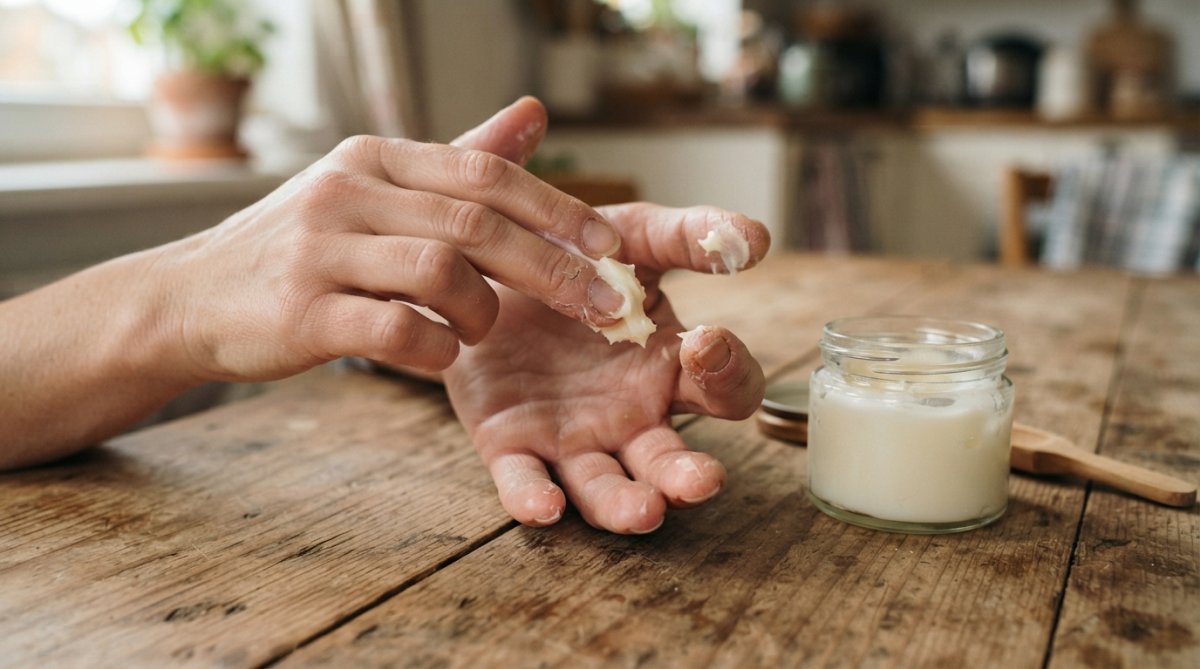
Step 1: Seal Active Skin Fissures
Deep, painful fissures need physical sealing before you apply any moisturizer. An open fissure will continue to split with every hand movement, and topical treatments applied directly into a crack can sting enough to discourage consistent use.
A liquid bandage product creates a flexible film over the split skin, protecting it from friction and allowing tissue underneath to begin wound healing. Once the fissure is sealed and acute pain is reduced, you can move on to the moisturizing steps that rebuild the skin barrier. For very minor surface cracks that haven't split deeply, this step can be skipped.
Step 2: Apply Humectants Before Occlusives
This is the step most people reverse, and it matters. Humectants are ingredients that attract water molecules and pull them into the outer skin layers. Applied to slightly damp skin right after washing, they draw moisture from the environment and deeper dermis up into the dry epidermis.
Common natural humectants include glycerin, aloe vera gel, and raw honey. Apply a thin layer to damp fingertips and allow it to absorb for one to two minutes before the next step.
Then seal with an occlusive. Occlusives form a physical barrier over the skin that slows transepidermal water loss and holds the humectant's moisture in place. Without an occlusive layer on top, humectants can actually draw moisture out of the skin in very dry conditions.
Step 3: Protect and Prevent Further Damage
Healing cracked skin on fingertips naturally requires protecting the repair work between applications. Wear gloves when washing dishes or cleaning. Apply a fresh occlusive layer after every hand wash, not just morning and night. Keep hand sanitizer use to a minimum when soap and water is available.
Reapplication frequency matters more than product quantity. A thin layer applied consistently outperforms a heavy application once a day.
| Step | Action | When to Do It |
|---|---|---|
| 1. Seal | Liquid bandage on deep fissures | Before moisturizing, as needed |
| 2. Humectant | Glycerin, aloe, or honey on damp skin | After washing, before occlusive |
| 3. Occlusive | Tallow balm or petrolatum | Over humectant, after every wash |
| 4. Protect | Cotton gloves or rubber gloves | During wet work and overnight |
Best Natural Ingredients for Skin Repair
Not all moisturizing ingredients work the same way. The best natural ingredients fall into distinct categories based on their mechanism.
Tallow, Petrolatum, and Occlusive Healers
Occlusives are the workhorses of cracked skin repair. They don't add moisture themselves; they prevent the moisture already in your skin from escaping.
Petrolatum is the most well-studied occlusive and is recognized by the FDA's guidance on over-the-counter skin protectants as an effective skin protectant. Many people prefer natural alternatives.
Grass-fed beef tallow has been used as a skin treatment for centuries. Its fatty acid profile, rich in oleic acid, palmitic acid, and stearic acid, closely mirrors the lipids found naturally in human skin. This biocompatibility means it absorbs readily without greasy residue. Tallow also contains fat-soluble vitamins A, D, E, and K, which support skin cell renewal and barrier repair.
IT'S THE BALM CO.'s Unscented Tallow Balm contains only two ingredients, making it ideal for anyone with sensitive skin or ingredient reactivity. It works well on cracked fingertips, eczema, contact dermatitis, and deep fissures without added fragrance or essential oils that can trigger reactions.

Humectants: Glycerin, Aloe Vera, and Honey
Glycerin is the most effective humectant available at a practical price point. It pulls water into the stratum corneum and is well-tolerated by most skin types, including those prone to eczema and dermatitis.
Aloe vera gel provides mild humectant properties alongside anti-inflammatory compounds that reduce redness and skin inflammation around fissures. Apply it to damp skin and let it absorb before sealing with an occlusive.
Raw honey is both a humectant and a natural antimicrobial. For cracked fingertips showing signs of minor infection, a thin layer left on for 15 to 20 minutes before rinsing can support wound healing while moisturizing the skin.
Nutrients That Support Skin Barrier Repair
The skin barrier is built from the inside out as well as the outside in. Nutritional deficiencies are an underappreciated cause of persistent cracking that topical treatments alone won't fully resolve.
Zinc plays a direct role in skin cell repair and wound healing. Vitamin C is essential for collagen synthesis, which gives skin its tensile strength. Niacinamide, also known as vitamin B3, supports ceramide production, the lipid molecules that hold skin cells together and prevent transepidermal water loss.
If your cracked fingertips persist despite good topical care, review your diet for these nutrients. Zinc is found in red meat, shellfish, and legumes. Vitamin C is abundant in citrus, bell peppers, and leafy greens. Niacinamide is available in both food sources and topical serums.
Nighttime Occlusion Therapy for Cracked Fingertips
Nighttime occlusion therapy is the single most effective technique for healing cracked skin on fingertips naturally.
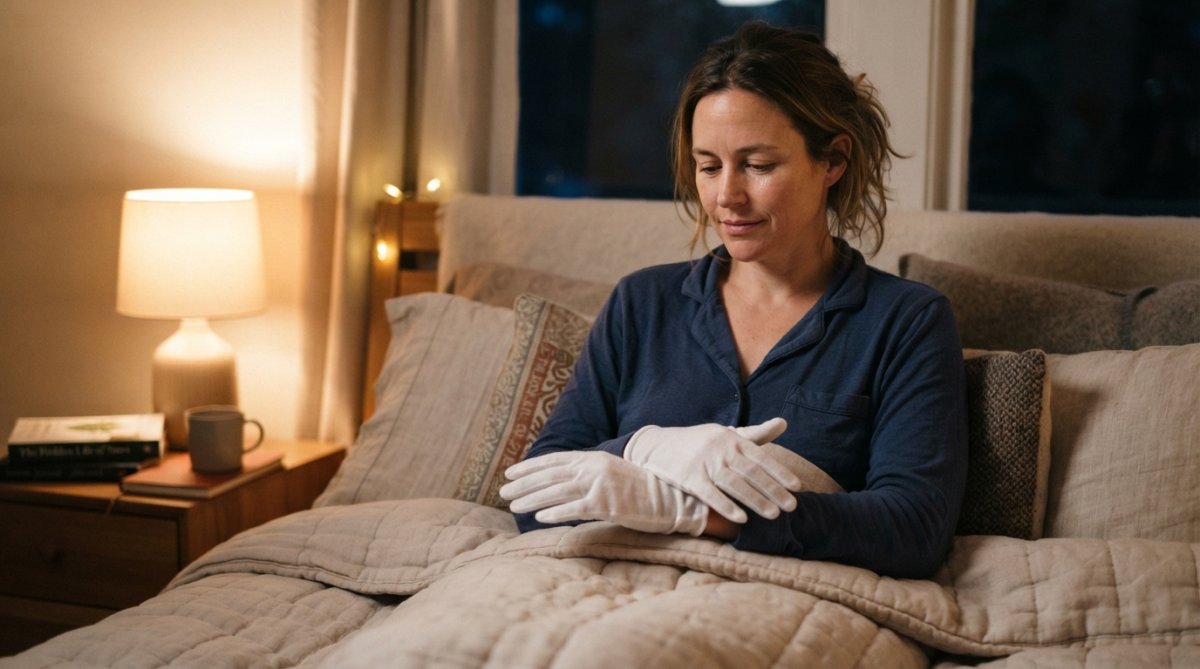
The principle is straightforward: apply a generous layer of occlusive balm to your fingertips, then cover them with thin cotton gloves before sleep. Over six to eight hours, the occlusive layer prevents all transepidermal water loss, creating a hydration-rich environment that accelerates skin barrier repair. The skin's natural regeneration cycle is most active during sleep, so this timing compounds the benefit.
The practical protocol:
- Wash hands gently with a mild, fragrance-free soap
- Pat dry, leaving skin slightly damp
- Apply a thin layer of glycerin or aloe vera to damp fingertips
- Apply a generous layer of tallow balm or petrolatum over the humectant
- Put on thin cotton gloves
- Sleep. Remove gloves in the morning and rinse with lukewarm water
Many people see noticeable softening after just two to three nights of consistent occlusion therapy. For severe fissures, a full week of nightly treatment is typically needed before the skin feels structurally repaired.
IT'S THE BALM CO.'s Soothe Tallow Balm or Whipped Unscented Tallow Balm work particularly well for this protocol; the whipped texture spreads easily without requiring friction on already-sensitive skin.

Ingredient Sensitivity and Habit Breaking
A common mistake is assuming that "natural" means safe for all skin types. It doesn't.
Essential oils, including lavender, tea tree, and eucalyptus, are among the most common contact allergens in skincare. Many products marketed as natural remedies for dry or cracked skin contain these ingredients at concentrations that can trigger or worsen contact dermatitis in sensitive individuals.
The cleanest test: switch to a truly minimal product. Two ingredients, tallow and nothing else, or petrolatum alone, will tell you quickly whether your skin responds well to occlusives in general. If even the simplest formulas irritate, consult a dermatologist about patch testing.
Many people unconsciously pick at or peel cracked skin, which extends healing time significantly. Keeping fingertips covered with bandages or cotton gloves during the day, not just at night, removes the tactile trigger that makes picking feel reflexive.
How Long Do Cracked Fingertips Take to Heal
How long cracked fingertips take to heal depends on the depth of the fissures, the consistency of treatment, and whether any underlying condition is involved.
Surface-level dryness and minor cracking typically improves within three to five days of consistent moisturizing. Deeper fissures that have split into the dermis generally take one to two weeks to close fully with proper occlusion therapy.
The factors that slow healing most reliably:
- Continued exposure to water and soap without reapplying occlusive afterward
- Skipping the nighttime occlusion step
- Using products with fragrances or essential oils that cause low-grade irritation
- Nutritional deficiencies, particularly in zinc or vitamin C
- An underlying skin condition like eczema or psoriasis that hasn't been addressed
If cracked fingertips haven't improved after two weeks of consistent natural treatment, the cause is likely more than environmental dryness.
When to See a Dermatologist
Most cracked fingertip skin responds to natural home care. There are situations where professional assessment is the right call.
See a dermatologist if you notice any of the following:
- Fissures that are deep, bleeding, or show signs of infection (increasing redness, warmth, pus, or red streaking)
- Cracking that spreads beyond the fingertips to the palms, knuckles, or other areas of the hands
- No improvement after two consistent weeks of occlusion therapy and good moisturizing practice
- Skin that blisters, weeps, or develops a rash alongside the dryness
- A history of eczema, psoriasis, or other skin conditions that may be driving the problem
According to the National Eczema Association's guidance on hand eczema, hand eczema is a distinct condition that often requires prescription-strength barrier repair or targeted topical treatments beyond what over-the-counter products can provide. A dermatologist can also identify contact dermatitis caused by specific allergens; a patch test can reveal sensitivities that would otherwise take years to identify on your own.
| Symptom Pattern | Likely Cause | Recommended Action |
|---|---|---|
| Dry, cracking fingertips in winter | Low humidity, frequent washing | Natural occlusion therapy at home |
| Persistent cracking despite moisturizing | Nutritional deficiency or skin condition | Review diet; consult dermatologist |
| Redness, weeping, or blistering | Eczema or contact dermatitis | See a dermatologist |
| Signs of infection | Bacterial entry through fissure | Medical evaluation promptly |
| Cracking across hands and palms | Psoriasis or systemic condition | Dermatologist assessment |
Cracked, painful fingertips are genuinely disruptive, but they're also one of the more responsive skin problems when approached correctly. The barrier is repairable; it just needs the right sequence of support. IT'S THE BALM CO.'s Unscented Tallow Balm provides a clean, two-ingredient occlusive that works well for sensitive skin and makes nighttime occlusion therapy straightforward. For those who prefer a whipped texture that's easier to apply on sore fingertips, the Whipped Unscented Tallow Balm is a strong option. Shop IT'S THE BALM CO. and give your skin barrier the natural support it needs to fully heal.
Frequently Asked Questions
How can I quickly heal cracked fingertips?
The fastest relief comes from sealing open skin fissures with an occlusive balm, then locking in moisture with a humectant like glycerin or aloe vera. Applying a tallow-based balm and covering your fingertips with cotton gloves overnight can support wound healing. Consistent twice-daily application, combined with avoiding hot water and harsh soaps, typically produces visible improvement within a few days.
Which vitamin deficiency is most likely to cause cracked fingertips?
Low levels of vitamin B3 (niacinamide) and vitamin C are commonly linked to poor skin elasticity and slow wound healing. Zinc deficiency also plays a role, as zinc supports the skin barrier repair process. Vitamin A supports healthy epidermis cell turnover. Grass-fed tallow naturally contains vitamins A, D, E, K, and B12, which is one reason it has long been used as a topical treatment for cracked and peeling skin.
What are cracked fingertips a symptom of?
Cracked fingertips can signal several underlying issues, including contact dermatitis, eczema, psoriasis, or thyroid dysfunction. Environmental factors like low humidity, repeated hand washing, and chemical exposure are also common culprits. In some cases, they reflect nutritional gaps or a compromised skin barrier with elevated transepidermal water loss. Persistent or worsening cracks that do not respond to natural remedies may warrant a visit to a dermatologist.
Is beef tallow effective for healing dry, cracked skin?
Tallow is rich in oleic, stearic, and palmitic fatty acids that closely mirror the lipid profile of human skin, making it highly compatible with the epidermis. Its occlusive properties reduce transepidermal water loss, while fat-soluble vitamins A, D, E, and K support skin barrier repair and reduce inflammation. Many people with eczema, dermatitis, and cracked skin report positive results. Grass-fed tallow, like that used in It's the Balm Co. products, contains these beneficial nutrients.
This article was written using GrandRanker